
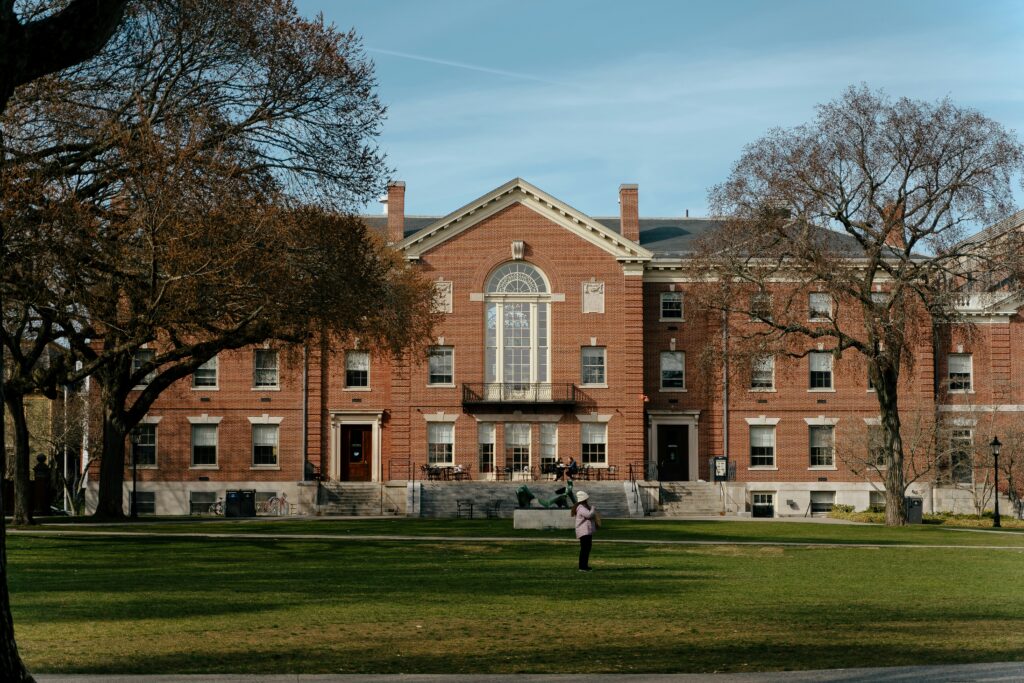
Brown University is a well known school, one of the six storied Ivy League institutions, and seen as a bastion of research and education. Well known for its free-form curriculum, Brown has long been extremely popular with students; last year their acceptance rate was a mere 5.65%, going down to 4% if you look at Regular Decision applications alone. That is, needless to say, quite competitive. But not every student who fails to get into Brown is rejected outright. Some are instead placed on Brown’s waitlist, where their final results remain up in the air. Most don’t get into Brown of course, but some do. In this article, we’re going to look at Brown’s waitlist, to understand how it works, what your odds are of getting off of it, and what you can do to improve those odds. Let’s jump right in!
Understanding Brown’s Waitlist
Brown releases both more and less information than its peers about how its waitlist works. On the positive side, they release a detailed account in the form of an FAQ about how their waitlist operates, which is more than many of their peer schools do. This does not answer every conceivable question, and we will go over some that it does not, but this is an excellent starting place.
What Brown does not release, however, is granular data on their waitlist acceptances. To clarify, they release how many students were admitted from the waitlist each year, but not how many were placed on it, thus making any assessment of actual odds of waitlist acceptance impossible.
They do describe these numbers in broad terms, saying that around 1,000-1,500 students accept places on their waitlist each year.This is a somewhat broad range, and makes any close analysis impossible. There are, however, a few things we can say with a degree of certainty.
The first is that Brown always admits at least a few students off of their waitlist. Never a massive number, but always some, at least in the years for which data is available. The next is that there is neither consistency or predictability in this data from year to year; the number of students who get in is above zero, but little else is certain.
This makes sense from what we know about how waitlists work. Brown only admits students off the waitlist if students who were admitted to Brown choose to attend other schools instead; this happens to every college, even elite schools like Brown. Brown more than others, perhaps because they admit fewer purposefully and turn to the waitlist to meet the gaps (though this is just conjecture).
They do not rank their waitlist (they say as much explicitly),which means that students are likely admitted off of it in the same manner they generally are for Brown; that is, through holistic review. This makes sense; when Brown builds a class each student is admitted as part of a larger whole, when one of those students leaves, they’ll look for similar (albeit not identical) students to fill the gap. After all, Brown doesn’t want to end up with a class of nothing but students interested in computer science.
This review may or may not begin before May 1, but acceptances off the waitlist come after that date. How long the review process takes seems variable, but they give a terminal date of the end of the summer; as students who were accepted and committed may be admitted off the waitlists of other schools, opening up new holes in Brown’s class.
Increasing Your Chances of Waitlist Acceptance at Brown
While it is unclear what exactly your waitlist acceptance chances are exactly, they certainly do exist, though they may not be high (but then, neither is Brown’s overall acceptance rate). This leads to the most common question we get from students: How can you improve your chances of getting in off of Brown’s waitlist?
The single most useful thing you can do is officially accept your place on the list; Brown won’t even continue considering you for admission unless you do that. This is quick and easy, and may be done through Brown’s student portal. We advise doing this promptly after you are waitlisted so it doesn’t slip your mind. You may do this after March 30; we advise doing so by mid-April.
After this, you can send Brown a letter of continued interest. This is a letter which tells Brown you are still interested, and updates them on what you’ve accomplished since you applied initially. Brown does accept these letters, but they discourage them. Specifically, they only want to hear updates from you (or your recommenders) if there’s something to add to your application that wasn’t included before, and thus not discussed in the initial round of applications.
In most cases, this means they want to hear about things you’ve been up to in the time since you applied (though if you did leave some major accomplishment off your application the first time, you should definitely rectify that mistake). These should also be achievements significant enough to warrant a new look at your application, to showcase new heights of your potential to contribute to Brown’s campus.
What this specifically is can be as varied as the students who apply to Brown, here are some examples (though by no means an exhaustive list):
- Winning a major competition, be it academic like Science Olympiad, or non, like a debate tournament
- Completing a significant research project (outside of school and not part of your coursework) and submitting it for publication
- Taking on new responsibilities, beginning new projects, or gaining new titles at a job or internship
These can take on many forms, depending on the nature of your extracurriculars, everything from submitting a film to festivals to being awarded a major scholarship (such as Coca Cola Scholars) can count as of interest to admissions officers. Note that things like regular high grades in your courses should not be included here; high academic performance is expected of you.
In your letter, try to tie each of these to a specific opportunity offered by Brown. The goal in this is to concretely demonstrate why Brown is your top choice, and also make Brown seem like the next logical step of your journey. This, in addition to stating clearly that Brown is your top choice school, illustrates to admissions officers that you will attend if admitted off the waitlist. This isn’t the only thing they look for of course, but is considered.
Additional Letters of Recommendation
Brown does accept these as updates, but these should only be sent in due to exceptional circumstances, where you have accomplished something that was not included on your application before, and want a third party to discuss it. We generally only recommend these come from research mentors if you have completed a significant new project, though there are other circumstances where they may be warranted.
Admissions officers have a lot of reading to do, and they take their jobs very seriously. They will read materials if you send them in, but you don’t want to add to their work needlessly; only include materials in your updates that substantially add to your application.
Final Thoughts
Brown is an excellent college, and is properly regarded as such by students across the US. This high regard contributes to an equally low acceptance rate, with many more students applying than possible seats. We hope that this article has given you new insight into how Brown considers these applicants, and the process they go through when deciding which to admit, and what to do with those they place on the waitlist.
College applications are complicated, unlike anything else you’ve done before or will do after. This can be stressful indeed, especially with acceptance rates at top colleges like Brown being so low. That’s where Ivy Scholars can help. Our mentors are masters of simplifying the admissions process, making it more approachable and manageable for students and families. If you want help with your own Brown applications, or advice on any other aspect of the admissions process, schedule a free consultation today, we’re always happy to hear from you.